 The Hosting Lexicon
Types of hosting
The short version
- Hosting types differ mainly in how much of a server you get to yourself.
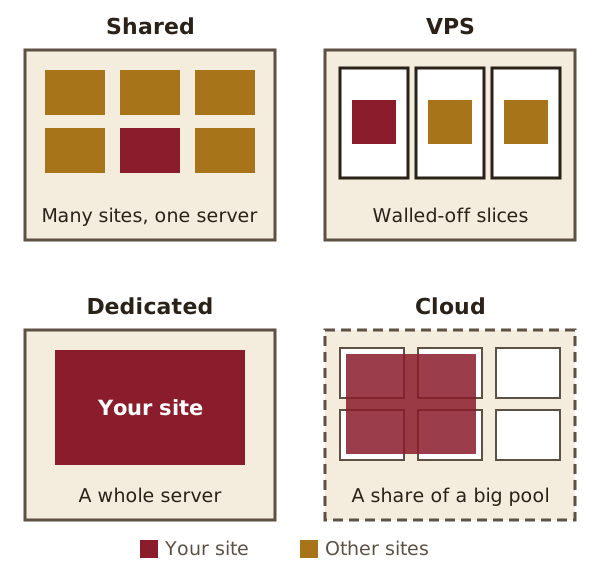
- Shared hosting puts many sites on one server. A VPS is a walled-off slice of a server. A dedicated server is a whole machine.
- Cloud hosting draws on a large pool of machines.
- Managed and unmanaged say who looks after the server: the host or you.
Web host
A web host is a company that keeps websites on its computers and makes them reachable on the web.[1]
Those computers are servers: machines that stay switched on and connected to the internet. Running one yourself takes money and skill. A web host does that work, and you rent space or power from it.[1]
For example, a small café that wants its menu online rents space from a host. It does not need to buy a server.
Origin: hosts began renting out space in the mid-1990s. See the history of web hosting.
See also: Shared hosting · Web server.
Shared hosting
Shared hosting puts many websites on the same server, where they share its resources.[1]
Those resources include the server's memory and its processor, or CPU.[1] Think of a block of flats on one water supply. If one flat runs every tap, the others get less.
The cost of running the server is split across many customers.[2] That makes it cheaper than other kinds of hosting.[2] The host usually looks after the server too.[2]
The trade-off is control. Customers can only use the software the host supports.[2] For example, a site that needs an unusual program may not be able to run it.
See also: Virtual host · Resource limits · Virtual private server (VPS).
Virtual private server (VPS)
A VPS is a virtual machine that a hosting company rents out.[3]
A virtual machine is a computer made of software. It runs on a real computer but acts like a separate one. Each VPS runs its own copy of an operating system, such as Linux.[3]
This gives more freedom than shared hosting. You can usually install almost any software you like.[3] But the real machine is still shared. If the other virtual machines are busy, yours may slow down.[3]
Origin: splitting one server into many became common after VMware ESX Server came out in 2001.[3]
See also: Hypervisor · Dedicated server · Unmanaged hosting.
Hypervisor
A hypervisor is software that creates and runs virtual machines.[4]
On a VPS server, the hypervisor creates each virtual machine. It also hands out the server's resources between them.[3] Each virtual machine sees only its own share.[3]
It works like a landlord who splits a house into flats. Each tenant gets a front door and a key, and never sees inside the other flats.
See also: Virtual private server (VPS) · Cloud hosting.
Dedicated server
A dedicated server is a whole physical server that one customer rents and shares with no one.[5]
The customer can choose the operating system and the software.[5] The host still owns the hardware.[5] It keeps the machine in a data centre.[5]
Dedicated servers cost more. So they are mostly used by busy sites and apps.[5] A large online shop with heavy traffic all day is a typical example.
See also: Colocation · Managed hosting.
Colocation
Colocation means you own the server, but you keep it in someone else's building.
That building is a data centre. It supplies space, power, cooling and physical security for the servers inside.[6]
The customer owns the hardware. So the customer usually sends their own staff to upgrade or fix it.[1] It is like parking your own car in a paid garage. The garage keeps it safe, but it won't service the engine.
See also: Dedicated server.
Cloud hosting
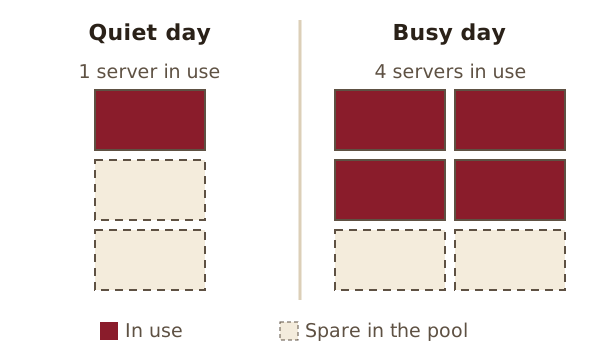
Cloud hosting runs a site on a large pool of shared computers. You use as much of the pool as you need.
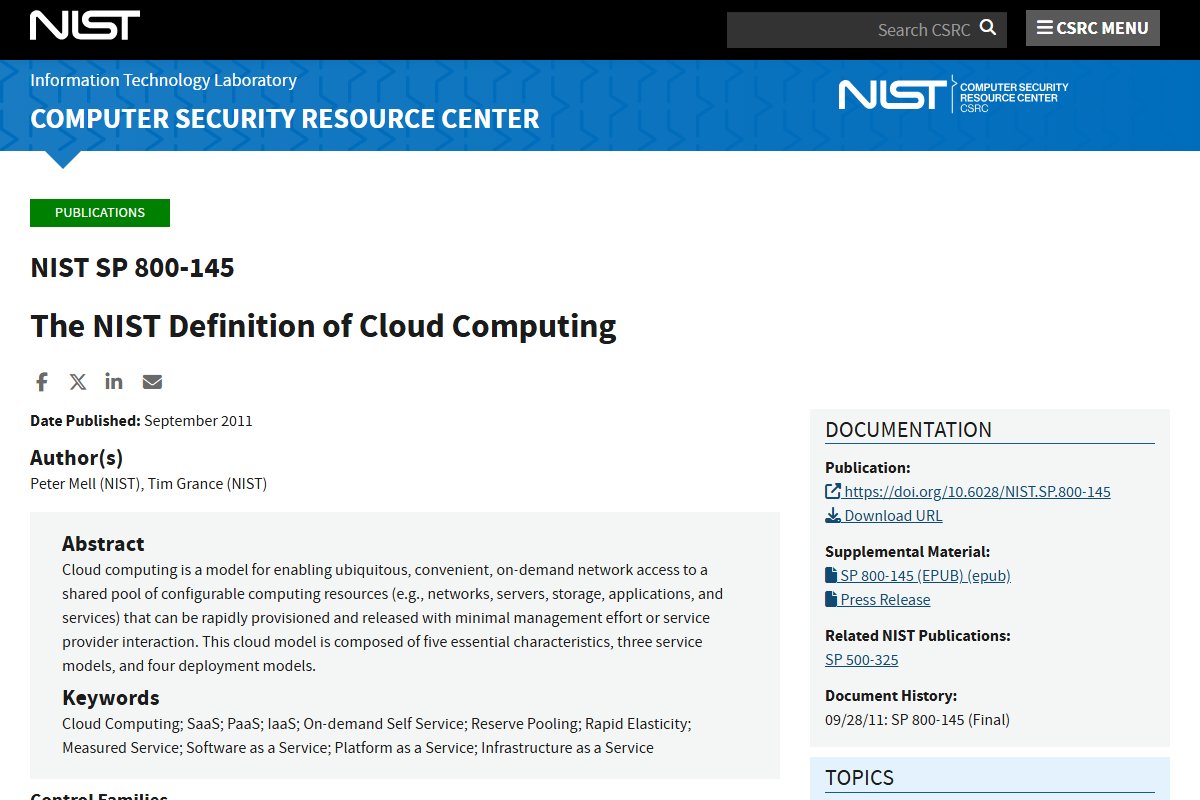
NIST, a US standards body, defines cloud computing as on-demand access to "a shared pool" of computing resources.[7] Those resources can be added or released quickly, with little effort.[7]
So a site can take on more power at a busy time. A ticket site, for example, could add capacity on the day sales open. The host can charge only for what was used.[1] If one machine fails, others in the pool can take over.[1]
Origin: NIST published its definition in September 2011.[7]
See also: Serverless · Pay as you go.
Managed hosting
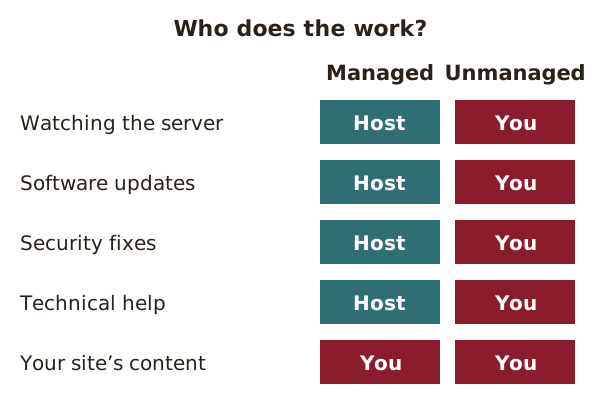
Managed hosting means the host looks after the server for you.
The host keeps watch on the server and installs software updates. It also handles security and gives technical help.[5]
There is no fixed standard for what "managed" includes.[5] Each host draws the line in a different place. So it pays to read what a plan actually covers.
See also: Unmanaged hosting · Backup.
Unmanaged hosting
Unmanaged hosting means you look after the server yourself.
You install updates, apply security fixes and solve problems.[5] In return, it usually costs less.[1] For example, a developer who is happy to run Linux might choose an unmanaged VPS.
See also: Managed hosting · SSH.
Reseller hosting
Reseller hosting lets a customer buy hosting and sell it on to their own clients.[1]
A web design studio is a common example. It hosts its clients' sites under its own name, on a larger host's servers. Resellers may offer shared, VPS, dedicated or other kinds of hosting.[1]
See also: Shared hosting · Control panel.
Sources
- Web hosting service, Wikipedia (accessed 2026-10-18)
- Virtual private server, Wikipedia (accessed 2026-10-18)
- Hypervisor, Wikipedia (accessed 2026-10-18)
- Dedicated hosting service, Wikipedia (accessed 2026-10-18)
- Colocation centre, Wikipedia (accessed 2026-10-18)
- SP 800-145: The NIST Definition of Cloud Computing, NIST (accessed 2026-10-18)